Faith and Manifestation: Healing Insights from a Mentor and Latina Psychotherapist
Faith, Manifestation, Mental Health, Women’s Healing, Latina Psychotherapist, Mentor
There Is No Manifestation Without Faith: A Psychotherapist’s Perspective on Healing and Receiving
Manifestation is not just a trendy spiritual word; it is a deep emotional and psychological process. To call in the life we desire, we need more than vision boards and affirmations. We need faith, the courage to let go, and a true readiness to receive. As a Latina psychotherapist, an immigrant, and the daughter of parents who lived in scarcity and fear, I have witnessed how faith can transform not only our circumstances, but also our mental health and sense of self. At Divine Embodiment Society, this blend of faith, rooted healing, and clinical insight is at the heart of how we support women’s inner growth.
There Is No Manifestation Without Faith
Rooted healing for women who are ready to receive the life they deserve
Why There Is No Manifestation Without Faith
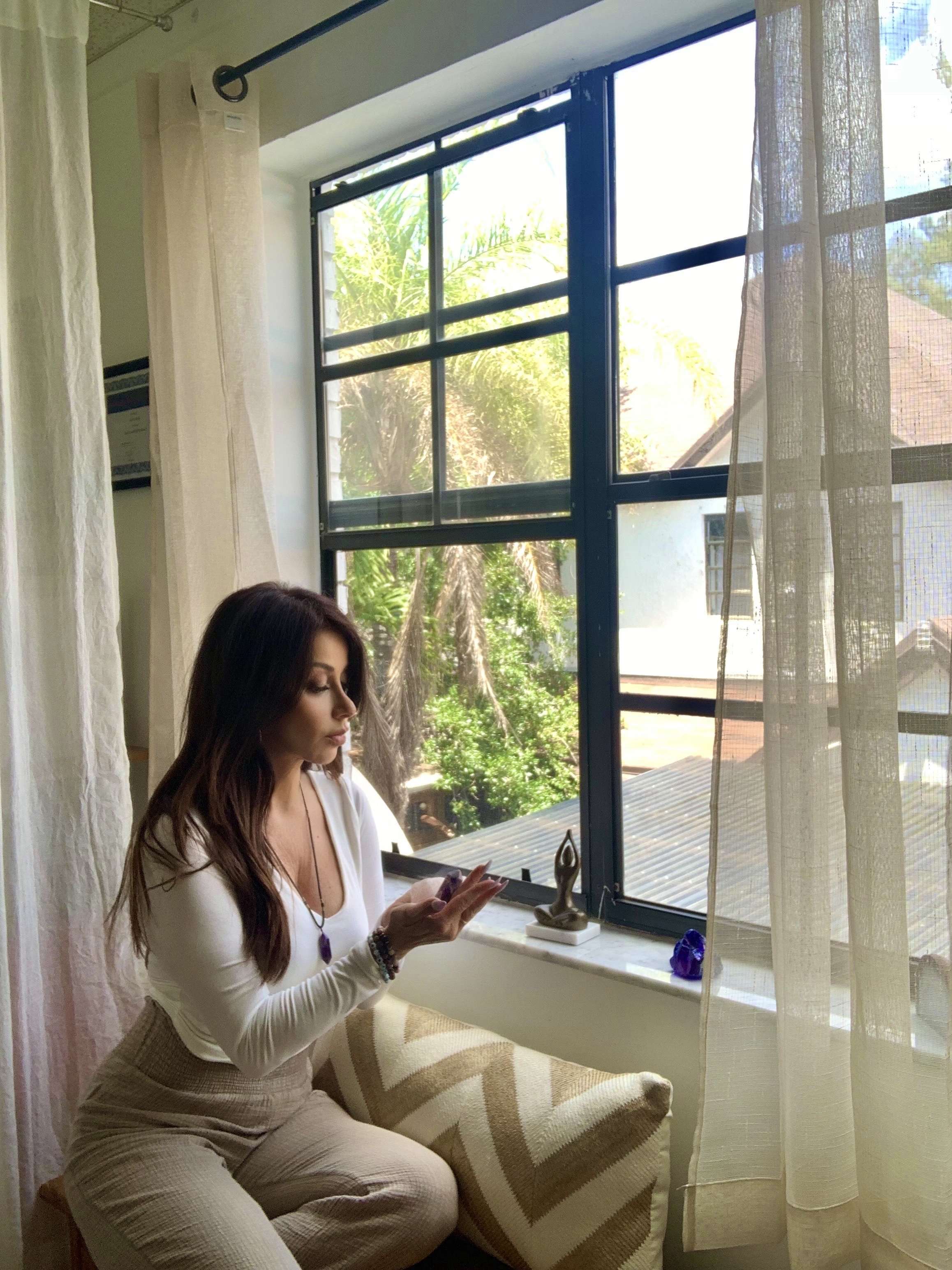
![Add an image of a real woman's picture meditating with the praying pose surrounded by surrounded by dim lighting and boho chic style decor [Brand guidelines: use brand color palette #f8f1e7, #a99d7a, #7f8c6e, #ea9ab0, #be417a]. Context: This is for a blog post about "There Is No Manifestation Without Faith: A Psychotherapist’s Perspective on Healing and Receiving". Style: Professional quality, photorealistic, high resolution](https://images.leadconnectorhq.com/image/f_webp/q_80/r_1200/u_https://storage.googleapis.com/funnel-ai-production/blog-ai/qytYaZwSlnazxPWRX2pj/blog-1785797074245-ocaud1.png "Add an image of a real woman's picture meditating with the praying pose surrounded by surrounded by dim lighting and boho chic style decor [Brand guidelines: use brand color palette #f8f1e7, #a99d7a, #7f8c6e, #ea9ab0, #be417a]. Context: This is for a blog post about \"There Is No Manifestation Without Faith: A Psychotherapist’s Perspective on Healing and Receiving\". Style: Professional quality, photorealistic, high resolution")
Manifestation asks us to believe in something we cannot yet see. Without faith, manifestation turns into an anxious attempt to control outcomes instead of a co-creative process with something greater than us. Faith is the bridge between our current reality and the life we are calling in. It softens fear, invites hope, and creates the inner safety we need to take steps that are aligned with our truth. Without this inner sense of safety, we stay stuck in survival mode, repeating the same patterns even when our heart longs for more.
Letting Go of What We Cannot Control: The First Doorway to Peace
Many of us, especially those who grew up in immigrant or marginalized communities, learned to always be prepared for the worst. My parents, like many Latinx immigrants, carried a deep sense of scarcity and fear. Their nervous systems were wired for survival: “What if we lose everything?” “What if something goes wrong?” This mental pattern can quietly block manifestation because we cling to control in order to feel safe.
Letting go does not mean being passive or “leaving everything to the universe” without any action. It means releasing what is truly outside our control: other people’s choices, the past, and all the worst-case scenarios our mind creates. Clinically, this aligns with acceptance-based approaches in therapy such as Acceptance and Commitment Therapy (ACT), which show that accepting what we cannot control reduces anxiety and emotional distress. When we loosen our grip, our nervous system can settle, and space opens for clarity, creativity, and new possibilities to emerge.
💡 Gentle Reflection: Ask yourself: “What am I carrying right now that is not mine to control?” Naming this burden is often the first step toward releasing it, and it is a profound act of self-care.
Trusting That Life Can Move in Your Favor
Faith does not mean denying pain or pretending that everything is “love and light.” It means holding a deeper conviction that even in the midst of difficulty, life can continue to move in ways that support your growth and well-being. This includes faith in a higher power, faith in your own resilience, and faith that you are worthy of beautiful things. For many women in the Divine Embodiment Society community, this faith is an act of resistance against inherited narratives of unworthiness, over-sacrifice, and silence.
Research in psychology consistently shows that spiritual and religious beliefs are linked to better mental health outcomes. Studies have found that higher levels of religious or spiritual involvement are associated with lower rates of depression, greater life satisfaction, and improved positive mood (Koenig, 2012; Smith et al., 2003). Faith can provide a sense of meaning, hope, and connection—powerful protective factors in the face of anxiety and despair. When you believe that life can manifest in your favor, your brain and body shift from chronic threat into a state of possibility and openness.
Faith soothes the nervous system and creates space for hope, clarity, and new choices.
Opening to Receiving: Allowing What You’ve Called In to Arrive
Many of us are excellent at giving, working, and caring for others—yet we feel deeply uncomfortable when it comes to receiving. Receiving love, support, money, rest, or recognition can feel unsafe if we grew up with messages like: “Don’t ask for too much,” “Be grateful for what you have,” or “Who do you think you are?” This is especially common among daughters of immigrants and women of color who learned to shrink themselves for other people’s comfort.
From a clinical perspective, learning to receive is nervous system work. It involves expanding your “window of tolerance” for good things. Positive psychology research shows that cultivating gratitude, savoring positive moments, and allowing ourselves to feel joy are linked to higher positive mood, fewer depressive symptoms, and greater overall well-being (Emmons & McCullough, 2003; Seligman et al., 2005). When we practice receiving, we are literally training the brain to notice safety, abundance, and connection—core ingredients for sustainable, soul-nourishing manifestation.
💗 Receiving Practice: Next time someone offers you a compliment, help, or kindness, pause, take a deep breath, and simply say, “Thank you.” Notice what happens in your body without judgment. This small act supports more positivity and self-care in your everyday life.
The Power of Faith for Women Healing From Scarcity and Fear
As a Latina psychotherapist and immigrant, I carry both my parents’ fears and their faith within me. They taught me to prepare for hardship—yet they also embodied prayer, devotion, and trust in something bigger than our circumstances. That faith has been a lifeline for me, personally and professionally. I believe that the more we deepen our faith—in ourselves and in a higher power—the easier it becomes to step into the life we were created for, not just the life we learned to survive.
Clinically, faith functions as a powerful coping resource. Meta-analyses have found that spiritual and religious involvement is often associated with lower levels of depression and substance use, as well as greater psychological resilience (Koenig, King, & Carson, 2012). Faith can offer a sense of belonging, moral grounding, and purpose—all of which support emotional stability and healthier choices. For many women, especially those from culturally rich and historically marginalized communities, honoring faith is also a way of honoring ancestors, lineage, and identity.
Faith, Manifestation, and Mental Health: What the Research Tells Us
Although “manifestation” is not a clinical term, many of its core elements—such as hope, meaning, self-belief, and openness—are deeply studied in psychology. Positive psychology research shows that having a sense of meaning and purpose in life is strongly associated with higher life satisfaction and lower psychological distress (Ryff & Singer, 1998). Hope has also been linked to better coping, higher positive mood, and improved treatment outcomes (Snyder, 2002).
Spirituality and faith-based practices, including prayer and meditation, have been associated with reduced symptoms of depression and anxiety, and with higher positive emotions (Koenig, 2012). In other words, when we believe and feel connected to something larger than ourselves, we often experience greater emotional resilience and a more hopeful outlook. These are the very inner conditions that make manifestation feel less like “forcing” and more like alignment and attunement.
📌 Key Takeaway: Faith is not a bypass of mental health or a denial of it; it is a clinically supported protective factor. When combined with grounded, trauma-informed therapeutic work, faith can support more stable mood, healthier coping, and a deeper sense of possibility. This integration is what we cultivate at Divine Embodiment Society to support women’s healing from within.
Walking This Path Together in Divine Embodiment Society
At Divine Embodiment Society, we honor both your humanity and your divinity. We understand that you may carry inherited stories of scarcity, fear, and self-doubt—and at the same time, you hold a quiet, steady knowing that you were made for more. Our membership spaces and mentorship containers are designed to help you release what you cannot control, deepen your faith in yourself and in a higher power, and truly open to receiving the love, support, and life you have been calling in for a long time.
Through guided practices, trauma-informed teachings, and community support, we weave together clinical wisdom with spiritual roots. You do not have to choose between the language of therapy and the language of faith; you are allowed to have both. You are allowed to heal in ways that honor your culture, feel emotionally honest, and resonate spiritually. This path is an ongoing invitation into self-care, positivity, and personal growth held within a supportive community.
A Gentle Invitation to Your Next Chapter
If your heart is longing for a life that feels more grounded, more connected, and more true to who you are, consider this your invitation. You are not “too much” for wanting more peace, more joy, and more alignment. You are simply remembering what you have always been meant to receive.
When you are ready to deepen your faith, soften your nervous system, and embody manifestation from a place of worthiness rather than fear, we would be honored to walk with you. Join one of our membership tiers or reach out to begin a mentorship journey with Divine Embodiment Society. Together, we can practice letting go, trusting more deeply, and opening fully to the life that has been waiting for you all along. This invitation is a grounded, practical step toward deeper healing and true inner growth.
Selected Clinical References and Resources
Koenig, H. G. (2012). Religion, spirituality, and health: The research and clinical implications. ISRN Psychiatry.
Smith, T. B., McCullough, M. E., & Poll, J. (2003). Religiousness and depression: Evidence for a main effect and the moderating influence of stressful life events. Psychological Bulletin.
Emmons, R. A., & McCullough, M. E. (2003). Counting blessings versus burdens: An experimental investigation of gratitude and subjective well-being. Journal of Personality and Social Psychology.
Seligman, M. E. P. et al. (2005). Positive psychology progress: Empirical validation of interventions. American Psychologist.
Ryff, C. D., & Singer, B. (1998). The contours of positive human health. Psychological Inquiry.
